
March 17, 2026
PerturbAI Open-Sourcing the World’s Largest Brain-Wide CRISPR Atlas
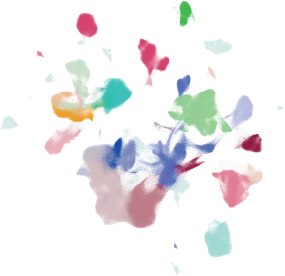
We are thrilled to announce the public release of the PerturbAI Brain-Wide In Vivo CRISPR Atlas. Spanning 8 million single cells in living tissue and hundreds of distinct neuronal cell types, this is the most expansive in vivo functional genomics resource ever created. By mapping the language of biology at an unprecedented scale, our platform provides the foundation for the next generation of AI-driven therapeutic discovery.
A Landmark Functional Atlas to Power Discovery and Therapeutics
Human biology is built from thousands of highly specialized cell types - and context matters. An immune cell and a brain cell may share the same genome, but they interpret and respond to changes in fundamentally different ways. While massive efforts have cataloged the genome and the diverse cells of our body, we still know little about how genetic mutations drive functional changes across diverse cell types.
We founded PerturbAI to fill this gap, using the combined power of in vivo CRISPR (Perturb-seq) and AI models. In collaboration with NVIDIA and 10x Genomics, we’ve now used this platform to generate and analyze the world’s largest brain-wide in vivo functional genomics atlas. Using large-scale CRISPR screening and single-nucleus RNA sequencing, we’ve built a functional map of the mouse brain's genome. Measuring the effects of nearly 2,000 disease-linked genes in their native environment, we’ve revealed the molecular logic of the neuronal circuits underlying neurodegeneration, psychiatric, and metabolic diseases.
Integrating this functional data with the Allen Institute’s high-resolution cell-type taxonomy, we precisely mapped each gene’s perturbation’s effects onto known neuronal circuits. Hongkui Zeng, EVP and senior author of the Allen Brain Cell Atlas, said,
“We view this as the next layer of the brain’s functional architecture: an interventional roadmap that identifies the potential causal drivers of disease within the context of the most comprehensive brain atlas to date.”
Foundation for AI-Driven Biology
Most AI models in biology today are trained on simplified systems - immortalized cell lines or in vitro assays - that lack the context necessary to generalize to human diseases. Our atlas provides a new kind of training data: causal, context-rich, in vivo measurements of gene function across the brain.
A core insight from our dataset is that the loss of the same gene can produce dramatically different effects depending on cell type, brain region, and state. These kinds of data enable models to learn not just correlations, but consequences, answering questions such as: What happens when I turn off gene X in cell type Y?
The rich representation of cell states and causal responses in this atlas makes it a powerful AI-training resource, enabling prediction across diverse cellular contexts and unlocking key insights that could dramatically accelerate the development of biological foundation models.
These models will be instrumental in prioritizing therapeutic targets, predicting downstream effects and simulating intervention outcomes, ultimately accelerating the path from insight to medicine.
How to access the Atlas?
To empower the scientific and AI communities, we’re releasing this new dataset and associated tools in three complementary ways:
Read the manuscript “Genome-scale functional mapping of the mammalian whole brain with in vivo Perturb-seq” on bioRxiv
Download the full dataset on Hugging Face
Explore the dataset with the NVIDIA AI Blueprint for Single-Cell Analysis that leverages scverse’s RAPIDS-singlecell on RTX PRO 6000 Blackwell Workstation Edition, helping PerturbAI speed up analysis from days to near real-time.
We are excited to see what the community unlocks with this dataset, from new models to life-saving therapies. Together, we are building a future where biology is no longer just observed, but understood and engineered for better human health.